An Artistic Profile.
A journey through the historical-artistic past of
Basilicata is undoubtedly fascinating. Here, more
than anywhere else, history explains art and art tells
the history of the region. Contested by both the Orient
and Occident, Basilicata experienced great artistic
moments from the very time that man appeared. Devastation
by theft, landslides, earthquakes or other catastrophes
are the tributes that the Lucanian artistic heritage
has given to history and which does not lend itself
to systematic analysis. This patrimony, as precious
as much as it is varied and far from the usual stylistic
canons, has always inspired the artistic artisan,
who makes any culture he comes in contact with his
own. The collection of ceramic materials gathered
in the museums of the region reveal a long tradition
of pottery-making and the use of clay, which abounds.
One is reminded of the Neolithic culture from Serra
d'Alto, with their ceramics decorated with graffiti
and paintings with spirals, triangles or diamond-shaped
figures on a bright brown background, and the splendour
of the Greek colonies supplied kilns and schools of
decoration to the painters of Pisticci and of Policoro.
Not to forget also the Roman period with floor mosaics
or the marvellous sarcophagus of Rapolla from the
2nd century B.C., which can be considered a phenomenon
of imported art, since it originally came from Asia
Minor. The importation of art then became common during
the feudal epoch and continued until 1600. The antique
Pietra Pagana (Pescopagano) today remains a reminder
of Gothic domination, where idols and inscriptions
dedicated to the god Silvano have been uncovered.
Later, new cultural impulses appeared thanks to the
spread of Greek-Oriental monasticism, which started
in the 7th century and continued throughout the Middle
Ages. This was the period when the monks arrived in
Lucania as followers of S. Basilio. Fleeing from Iconoclastic
persecution and from the rampant spread of the Arab
population; animated by the need for a more contemplative
life, they built numerous hermitages, 'laure' and
monasteries, above all on the Murgia of Matera and
within the city itself. The sculpted architecture
and frescoed walls greatly influenced the artistic
life of the Materano, where there is a very high concentration
of Rupestrian churches (155 ascertained today) in
Pollino and the Agri and Sinni Valleys, where the
frescoed remains of the S. Angelo Monastery on Mount
Raparo, founded by S. Vitale, can still be seen. The
history of art in Basilicata usually begins with the
frescoes of the Cripta del Peccato Originale (crypt
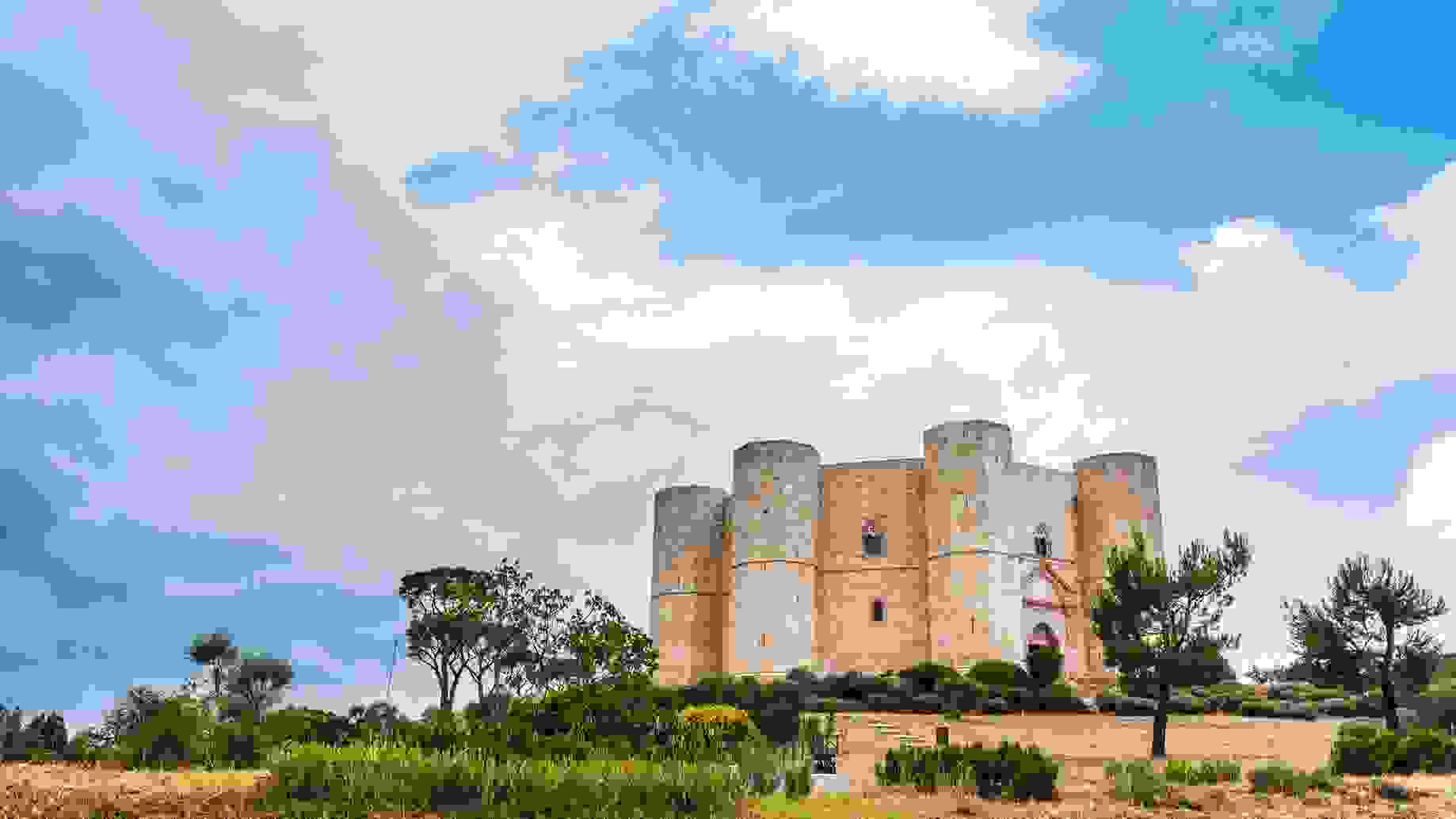
of the Original Sin) in Matera. With the Norman-Swabian
Middle Ages we have, imposing fortifications, above
all in Basilicata. The counts and barons reinforced
the small pre-existing Byzantine and Longobard fortresses
or built new roccaforti (strongholds) and castles:
the most important are those relating to Frederick
of Swabia located in Melfi, Lagopesole and Palazzo
S. Gervasio. Also in the religious environment, there
are tangible signs of artistic vivacity. New Benedictine
settlements arose and new artists were called upon
to direct and decorate them: Sarolo da Muro, Melchiorre
da Montalbano, Noslo di Remerio, and Mele da Stigliano.
Examples of the Romanesque style, with influences
from various Italian regions as well as Cluniac Gothic,
are: the Abbey of SS. Trinità of Venosa, The
Acerenza Cathedral, the bell tower of the Melfi Cathedral,
S. Maria of Anglona, the Matera Cathedral and Rapolla
Cathedral, the Sanctuary of S. Maria of Pierno, the
Abbey of S. Michele Arcangelo in Montescaglioso, S.
Michele in Potenza, the small church of S. Mary of
the Graces in Capodigiano at Muro Lucano, S. Giovanni
Battista and S. Domenico in Matera and the Duomo in
Atella. The Angevin Age is represented by the frescoes
of the Trinità of Venosa and of the Rupestrian
churches of S. Mary of the Valley in Matera, S. Antuono
at Oppido Lucano, S. Lucia at Rapolla and of S. Margherita
at Melfi. The practice of painting the rupestrian
churches continued, but the spread of the Franciscans
and their churches, towards the end of the 13th century,
introduced an innovative vein in Lucanian painting
(crypt of S. Francis in Irsina). The crisis of the
Kingdom of Naples led to the division of the territory
into small states held in the hands of feudal lords,
who built new or restored the old castles: such as
Melfi, Miglionico, Valsinni and Episcopia. Today,
survived towers can be seen at S. Mauro Forte and
at Picerno, but the castles of Moliterno, Brienza,
Cancellara and Lavello are also beautiful. Some have
been demolished, others reduced to ruins; yet together
with entire abandoned centres like Craco, they constitute
remains that signal the passage of time and create
an atmosphere that is rich in memories. With the Aragons,
we have a further period of fortification along the
Jonian and Tyrrhenian coasts. The castles of Venosa,
Matera and Bernalda date from this period. Sculpture
is represented by the valuable 'durazzeschi' portals
of S. Francesco at Potenza and of S. Antonio at Tricarico,
or by reminiscence catalane (Catalan traces), as on
the beautiful door of the Convent of the Minori Osservanti
(Lesser Observants) in Rivello. It is in the Cathedral
of Matera, with the stone Nativity scene by Altobello
Persio (1534) and with the Chapel of the Annunciation
(also in stone) by his son Giulio, that the 1500s
and the Adriatic Renaissance influence are affirmed.
Important hints of the Renaissance can also be seen
in the Abbey of S. Michele Arcangelo at Montescaglioso
or in the frescoed pilasters of S. Donato of Ripacandida.
The phenomenon of imported and imitated art takes
on vigour: an example is the Polittico di Cima by
Conegliano preserved in the church of S. Francesco
at Miglionico. It also witnesses the emergence of
local painters like Giovanni de Gregorio, known as
the 'Pietrafesa' (stonecutter), Carlo Sellitto, Pier
Antonio and the brothers Antonio and Constantino Costabile.
The cloister of the monastery of S. Maria of Orsoleo
contains the frescoes by Giovanni Todisco of Abriola,
protagonist of the Lucanian 1500s, who also painted
the Renaissance Ferrillo crypt of the Cathedral of
Acerenza. A new generation of feudal lords built new
residences: Palazzo Pignatelli at Marsico Nuovo and
Palazzo Ducale (Ducal Palace) at Tricarico are only
some of the examples. The cultural reawakening is
due to the Lucanian Baroque. In Matera, Palazzo Lanfranchi
is the centre of urbanistic expansion, followed by
the Church of the Purgatory and the convent of the
Clarisse di S. Chiara and S. Francesco d'Assisi and
the Palazzo del Sedile, today the site of the Conservatory.
An artistic synthesis of the Middle Ages of 1800 is
represented by the fortified farms, originating on
monastic settlements or near seasonal pastures. Among
these it is important to mention the farm castle of
S. Basilio at Pisticci and the Farm Palace of Scanzano
Jonico. Interesting works can be found, such as the
church of the rural Borgo (village) La Martella built
by Ludovico Quaroni. Important contemporary artists
are Joseph Stella, Luigi Guerricchio, and Mauro Masi,
but also many others.